
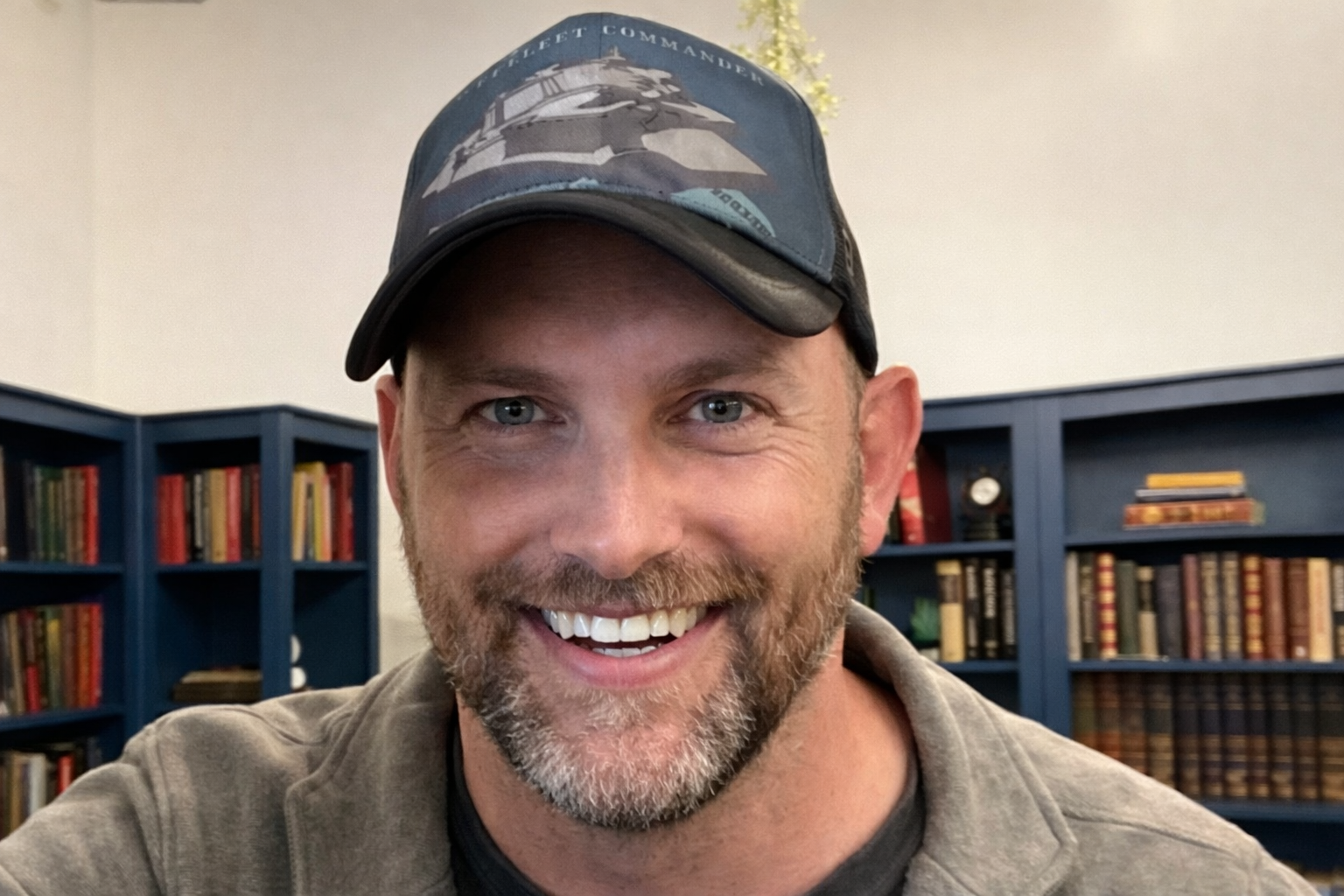
Breast cancer treatment can be brutal even when it works. For many patients, the hardest part is not just the side effects. It is the waiting. A person can spend weeks or even months going through chemotherapy before doctors know whether the treatment is actually helping. That delay can mean more stress, more uncertainty, and more time spent on a path that may not be the right one.
That is the problem Roy Stillwell set out to take on with NearWave.
Rather than building another healthcare startup around vague promises, Stillwell and the NearWave team focused on something very specific. They wanted to help physicians evaluate treatment response faster, using a handheld imaging device designed to give earlier insight into what is happening inside breast tissue. It is a serious medical problem, and the company’s rise has come from treating it that way.
NearWave did not appear out of nowhere. The company grew out of engineering research, years of work in biophotonics, and a founder who understood both the technical side of imaging and the human side of cancer care. That mix has helped Roy Stillwell turn NearWave into one of those medtech startups people are starting to pay real attention to.
Who Is Roy Stillwell
Roy Stillwell is not the kind of founder whose story begins with a flashy startup trend. His background is deeply technical. Public company and university profiles describe him as the co-founder, CEO, and chief scientist or chief engineer of NearWave, with a PhD in electrical engineering from the University of Notre Dame and a research focus in biophotonics.
That matters because NearWave is not a business you can build on branding alone. Medical imaging, breast cancer monitoring, and clinical device development demand real expertise. The founder has to understand the science, the product, the workflow, and the problem doctors are trying to solve.
Stillwell’s experience appears to sit right at that intersection. NearWave’s public materials also highlight his years of programming, embedded design, and system architecture work. In other words, he was not just approaching this as a researcher. He was approaching it as a builder.
That builder mindset shows up all over the company’s story. NearWave is not framed as a concept or a distant research ambition. It is framed as a practical tool meant to help oncologists make faster and better-informed decisions.
How the Idea for NearWave Started
NearWave’s roots go back to the University of Notre Dame, where Roy Stillwell and professor Thomas O’Sullivan developed the technology in the electrical engineering labs. According to Notre Dame’s reporting on the company, one of the early sparks came from mock grant proposals in a biophotonics class. What started as an academic idea turned into something much more serious once the team saw the clinical potential.
That lab-to-startup path is a big part of what makes the NearWave story interesting.
A lot of founders talk about innovation, but research commercialization is a different challenge entirely. It is one thing to prove a concept in a controlled setting. It is another to build a device that can actually be used in clinical environments by real physicians dealing with real patients.
Stillwell seems to have recognized that gap early. NearWave did not stay parked in the academic world. It moved toward product development, prototype testing, and commercialization. That shift is what turned the project from a piece of promising university research into a rising healthcare startup.
What NearWave Is Building
At the center of the company is the NearWave Scanner, a handheld imaging device built around frequency-domain near infrared spectroscopy, often shortened to fdNIRS. In simple terms, the technology uses near-infrared light to assess important tissue biomarkers such as oxygen saturation, hemoglobin, water, and lipids.
That may sound highly technical, but the purpose is straightforward. NearWave wants to give physicians a better way to monitor how breast cancer treatment is working, especially during the pre-surgery treatment window when timing matters.
The company’s public positioning focuses on speed and usability. Instead of waiting months to understand therapy response, the goal is to give clinicians useful insight in a much shorter period. That is a big reason NearWave has gained traction. The company is not just selling a device. It is addressing a painful delay in cancer care.
There is also a practical advantage in the broader imaging conversation. NearWave’s technology is positioned as non-invasive and non-ionizing, which makes it different from more burdensome imaging approaches. The company also states that the scanner is currently investigational and used for research only, which is an important detail in understanding where it sits today. Even so, the direction is clear. NearWave is trying to bring deep tissue optical imaging out of the lab and into a clinical workflow that feels more immediate and more useful.
Why Roy Stillwell Focused on Breast Cancer Imaging
The strongest startup stories usually begin with a real problem, not a market trend, and that is true here.
NearWave’s public founder story ties the mission to personal experience. Roy Stillwell has shared that both his mother and grandmother are breast cancer survivors, while his co-founder’s wife also went through the disease. That gives the company’s work a more personal edge. This is not just about developing an imaging platform because the science is interesting. It is about reducing the toll that ineffective treatment can take on people and families.
That mission also helps explain why NearWave has stayed focused. Breast cancer care is a large, complex space, but the company’s pitch has remained specific: help doctors understand treatment efficacy sooner so patients are not left enduring unnecessary side effects while waiting for answers.
That kind of clarity matters in healthcare innovation. It makes the company easier to understand, easier to support, and easier to remember.
Turning Research Into a Practical Product
Moving from a PhD project to a medical device company is not a smooth or simple jump. It takes product design, technical validation, industrial design, clinical input, and a clear sense of how physicians will actually use the technology.
This is one of the most important parts of Roy Stillwell’s founder story.
NearWave’s public team page shows that the company did not grow as a one-person technical experiment. It built around complementary expertise. Alongside O’Sullivan’s background in tissue optical spectroscopy and imaging, the company brought in industrial design, UI, engineering, and medical advisory support. That matters because healthcare products live or die by usability. A technically advanced imaging device still has to work in the real world.
Notre Dame’s reporting on the NearWave Imager captured that challenge well. Thomas O’Sullivan noted that advanced near-infrared technology had been around for years, but it often stayed in the hands of physicists and engineers. The real leap was making it intuitive enough for clinicians to pick up and use. That is where Stillwell’s role becomes especially clear. He was not only helping push the science forward. He was helping translate that science into a device designed for practice, not just publication.
That kind of translational research is hard, and it is one reason NearWave stands out in the medtech startup space.
The Milestones That Helped NearWave Gain Momentum
NearWave’s growth has not come from one big headline. It has come from a series of meaningful wins that built credibility over time.
Early on, the company picked up recognition through startup and innovation competitions. Public information from NearWave and Notre Dame highlights wins in the McCloskey New Venture Competition, the Elevate Ventures Nexus competition, the TechPoint Mira Awards, and the ASU.io Pay It Forward Prize. Those milestones mattered because they signaled two things at once. First, the company had a compelling technical foundation. Second, outside judges and startup ecosystems believed there was real commercial potential behind it.
Funding helped reinforce that story. NearWave’s company news also says it closed a $1.2 million pre-seed round, while other investor and company updates point to backing from groups including FlyWheel Fund, Cancer Fund Impact Investments, and Health Wildcatters. For an early-stage medical device company, that kind of support is not just about capital. It is also about trust.
Investors in healthcare and diagnostics tend to know the road is long. If they are backing a company at this stage, they are backing the team’s ability to execute through product development, regulatory planning, and clinical adoption challenges.
Roy Stillwell’s ability to keep NearWave moving through those stages is a major part of why the company now feels like a startup with real momentum rather than just a promising research project.
How Roy Stillwell Turned NearWave Into a Y Combinator Backed MedTech Company to Watch
One of the clearest signals of startup momentum came when NearWave joined Y Combinator’s Winter 2022 batch.
That was a meaningful step for several reasons. For one, Y Combinator is still one of the most recognized startup accelerators in the world. Getting accepted into the program gave NearWave a stronger level of external validation at a time when it was still early in its company-building journey.
It also helped place NearWave into a much bigger startup conversation.
Medtech founders often have to balance two very different worlds. One is the long, detailed, evidence-heavy reality of healthcare innovation. The other is the fast-moving startup world built around fundraising, traction, and market expansion. Y Combinator gave NearWave a bridge between those two worlds.
Notre Dame’s IDEA Center described YC as a stamp of approval for startups, and that framing fits here. NearWave was not just another university spinout anymore. It had become a company that investors, operators, and startup observers had a reason to watch.
That visibility matters. It opens doors, sharpens messaging, and forces a company to define exactly what it is building and why the market should care. Roy Stillwell seems to have used that stage well, positioning NearWave around a clear promise: faster treatment insight for breast cancer patients and a more responsive path for physicians.
From Technical Validation to National Startup Recognition
NearWave’s story did not stop with YC.
The company continued building credibility through publications, public visibility, and accelerator participation. NearWave’s own materials note that its work has been presented at national and international conferences and featured in peer-reviewed journals. That kind of technical validation matters in a field like optical imaging, where trust has to be earned.
At the same time, the company has gained broader startup recognition. In 2025, NearWave was included in Health Wildcatters’ 13th cohort, which added more momentum within the healthcare startup ecosystem. It also appeared as a TechCrunch Startup Battlefield 200 company for Disrupt 2025, giving it national startup exposure beyond the usual medtech circles.
More recently, NearWave was also highlighted in a 2026 Photonics magazine feature noted by the O’Sullivan Research Group at Notre Dame. That kind of coverage may not generate the same noise as a funding headline, but it speaks to something deeper. It suggests that the company’s work is being taken seriously by people close to the science and the field.
This is what real startup traction often looks like in healthcare. It is not one viral moment. It is the steady layering of proof, visibility, partnerships, and industry attention.
What Makes Roy Stillwell’s Leadership Story Worth Watching
Roy Stillwell’s rise with NearWave stands out because it reflects a kind of founder story that tends to age well.
He is not simply the face of the company. He is deeply tied to the underlying technology, the product vision, and the mission. That can be especially powerful in medtech, where founders often need to communicate across very different audiences at once. They have to speak to engineers, clinicians, investors, university ecosystems, and startup operators, sometimes all in the same month.
Stillwell’s background seems to give him credibility in each of those rooms. He can talk about deep tissue imaging, near infrared spectroscopy, biomarkers, and device architecture, but the company’s public story also keeps coming back to something much more human: helping patients avoid unnecessary suffering from ineffective treatment.
That combination matters.
It is one thing to build a technically impressive device. It is another to build a company around a clear clinical purpose and keep that purpose visible as the startup grows. Roy Stillwell appears to have done both.
What NearWave’s Growth Says About the Future of Breast Cancer Care
NearWave’s rise points to a larger shift in healthcare. More companies are trying to move cancer care away from delayed feedback and closer to real-time decision-making. That does not mean every clinical problem has an easy answer. It does mean there is growing demand for better tools that help physicians act sooner.
In that sense, NearWave fits a much bigger trend in medical technology. The future of oncology is not only about discovering new therapies. It is also about improving how treatment response is measured, monitored, and adjusted.
That is where Roy Stillwell and NearWave have found a meaningful position.
The company sits at the intersection of breast cancer imaging, non-invasive diagnostics, optical sensing, and healthcare innovation. It is using fdNIRS, tissue biomarker analysis, and real-time imaging concepts to tackle one of the most frustrating gaps in treatment monitoring. That is a strong place to be, especially as more investors, clinical partners, and startup programs look for companies solving practical problems with real medical value.
NearWave is still early compared with the giants of medical imaging, but that is part of what makes the story compelling. It is a reminder that some of the most interesting healthcare companies do not start with scale. They start with a founder who sees a broken process clearly, understands the science well enough to rethink it, and keeps building until other people start to see the opportunity too.


