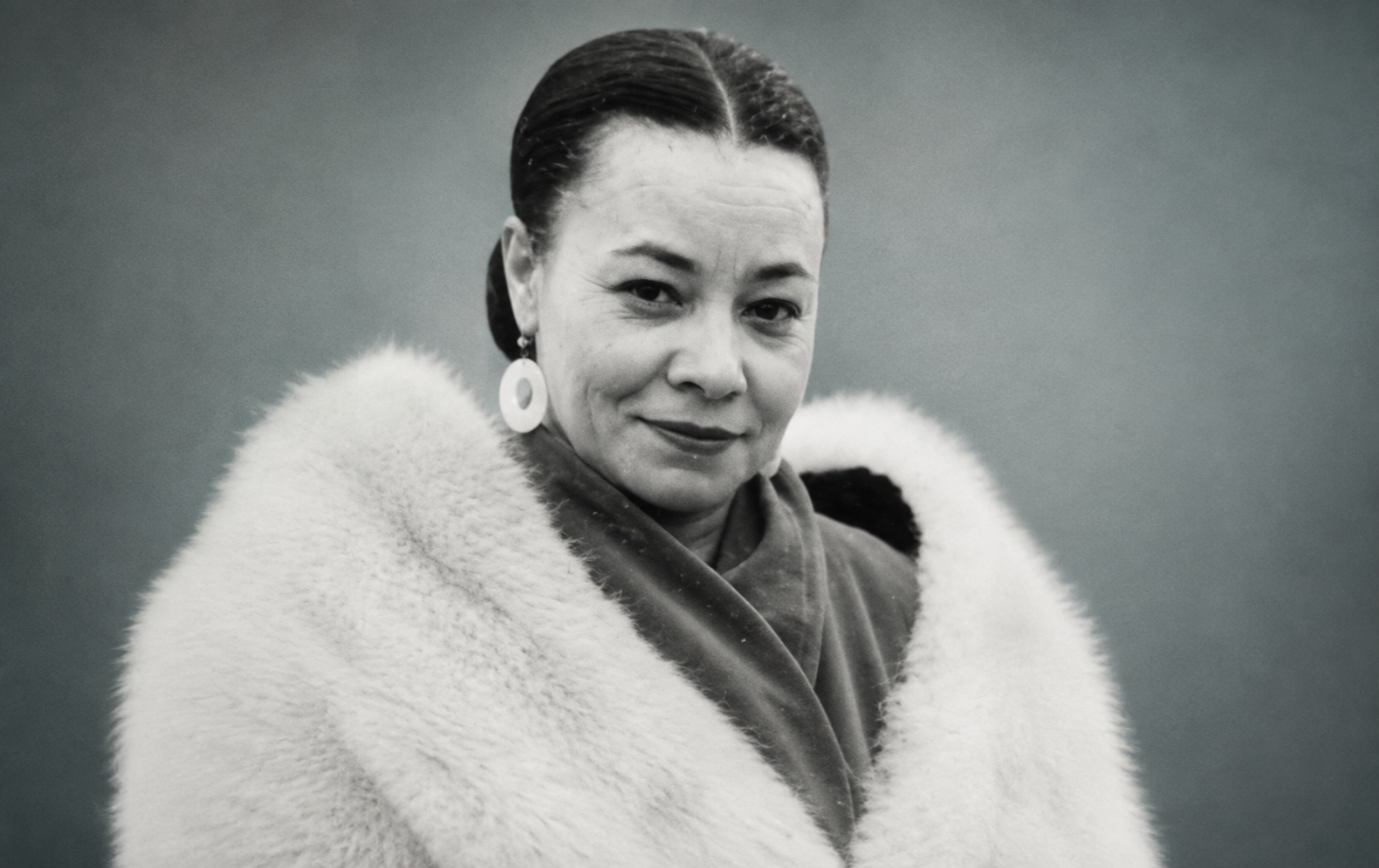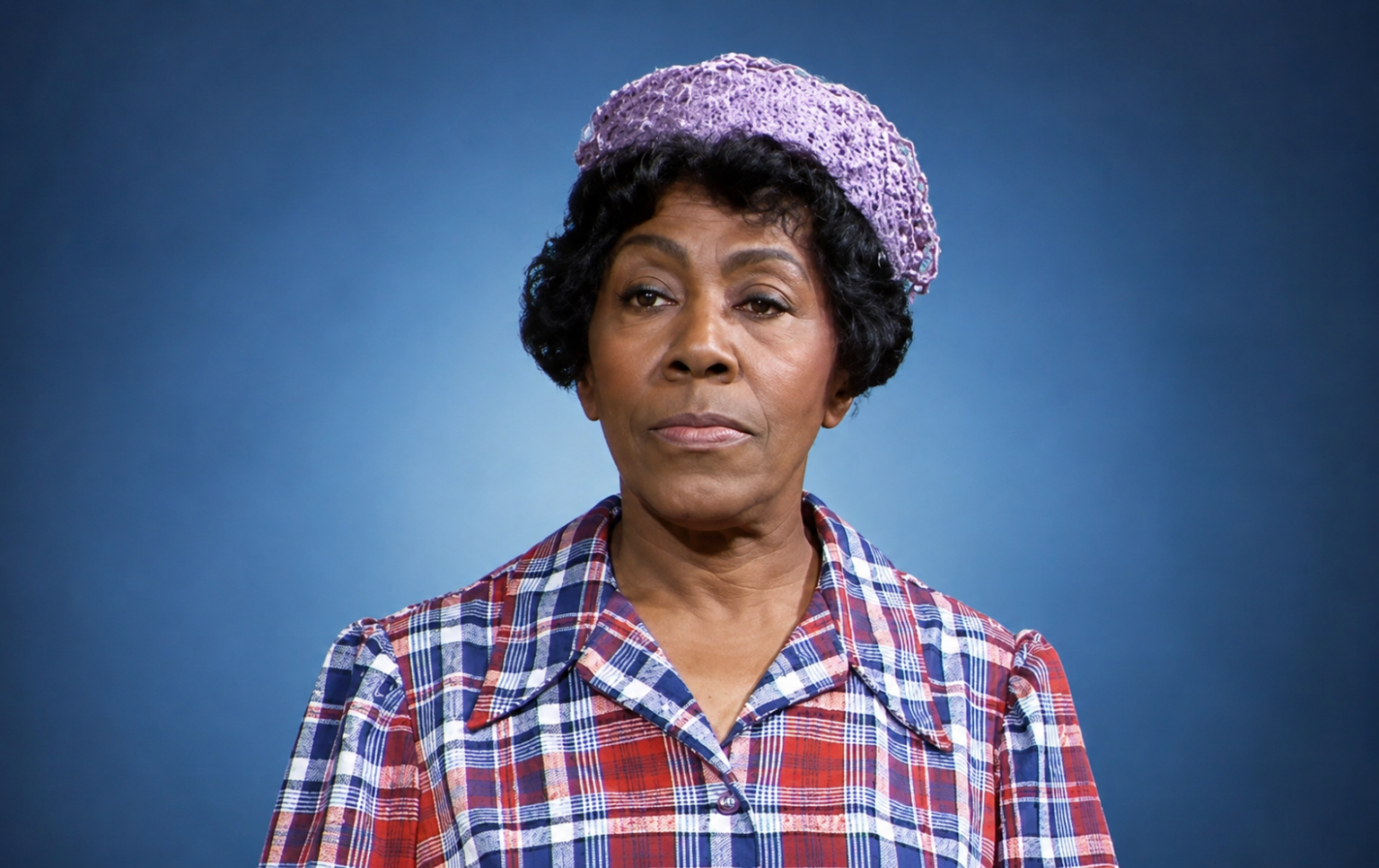
You probably know her face before you know her name: the sharp-tongued neighbor leaning over the stoop on 227, or the churchgoing friend of the Evans family on Good Times. That was Helen Martin. What almost every profile of her leaves out is where she came from, and it’s the most important part of the story: decades before television, she helped build one of the most important Black theater institutions in Harlem history.
This is the full picture, the facts, the career arc, the Harlem roots, and straight answers to the questions people actually search for.
Helen Martin at a Glance
| Full name | Helen Dorothy Martin |
| Born | July 23, 1909, St. Louis, Missouri (raised in Nashville, Tennessee) |
| Died | March 25, 2000 (age 90), Monterey, California |
| Cause of death | Heart attack |
| Best known for | Pearl Shay on 227 (1985–1990); Wanda Williams on Good Times (1974–1979) |
| Family | Never married; no children |
| Career span | 60+ years, 100+ credits across Broadway, TV and film |
| Reported net worth | ~$1 million at time of death |
Two quick clarifications, because search engines and fans mix these up constantly. Pearl Shay is her 227 character. Wanda Williams is her Good Times character. Same actress, two different iconic roles, more than a decade apart.
Early Life and the Harlem Connection Everyone Skips
Martin was born in St. Louis in 1909 and raised in Nashville, where she attended segregated schools and briefly studied at Fisk University. Acting wasn’t a realistic career for a Black woman in the American South at the time, so, like so many artists of her generation, she went north.
She landed in New York and trained through the Federal Theatre Project (the WPA’s theater arm) and the Rose McClendon Players, a Harlem company that nurtured Black actors when mainstream stages wouldn’t. Then came the pivotal moment: in 1940 she became a founding member of the American Negro Theater (ANT) in Harlem.
That is not a footnote. The ANT was the launching pad for a staggering roster of talent, Sidney Poitier, Ruby Dee, Harry Belafonte, Ossie Davis, and Isabel Sanford all passed through it. It operated out of the basement of the 135th Street library branch and became the engine room of a Black theater movement that fed straight into Broadway and, eventually, Hollywood. Helen Martin was there at the start.
This is the Harlem the site’s other profiles keep circling, the same golden-age creative world tied to landmarks like the Audubon Ballroom and the theaters where a generation of Black performers first found an audience. Martin belongs squarely in that lineage, alongside figures like director Ivan Dixon and actor Billy Dee Williams.
Understanding that foundation explains everything that followed. Martin wasn’t a TV actress who got lucky late in life. She was a working stage professional for 30 years before most viewers ever saw her, and that craft is exactly why her later character roles landed so cleanly.
Helen Martin’s Career Timeline
Rather than a flat filmography, here’s the actual arc, because the shape of it is the story.
- 1937: Broadway debut in Orchids Preferred.
- 1941: Appears in Orson Welles’ Broadway production of Richard Wright’s Native Son.
- 1940s: Core American Negro Theater years in Harlem.
- 1950s–1960s: Steady stage work, including productions connected to Purlie Victorious, The Amen Corner and Jean Genet’s The Blacks.
- 1973–1975: Part of the Broadway musical Raisin, the Tony-winning adaptation of A Raisin in the Sun.
- 1970s: Her television breakthrough. Guest and recurring roles on Sanford and Son, Maude, What’s Happening!! and That’s My Mama, plus Wanda Williams on Good Times (1974–1979).
- 1985–1990: Pearl Shay on 227, the role that made her a household name in her late 70s and early 80s.
- 1990s: A run of memorable film character roles, Hollywood Shuffle (1987), House Party 2, Don’t Be a Menace to South Central While Drinking Your Juice in the Hood (1996), I Got the Hook-Up and Bulworth (1998).
Look at the timeline and one thing jumps out: her most famous role, Pearl, came when she was pushing 80. Few actors have a career peak that late. Fewer earned it across six decades of unglamorous, consistent work.
Essential Roles and Work
Pearl Shay on 227
Pearl was the wisecracking, window-watching neighbor who could deliver a punchline and a life lesson in the same breath. On a show built around Marla Gibbs’ Mary Jenkins, Martin’s Pearl was the seasoned counterweight, and for a generation of viewers she is Helen Martin. If you searched “who played Pearl on 227,” this is your answer.
Wanda Williams on Good Times
Years earlier, Martin was a recurring presence in the Evans family’s Chicago world as Wanda Williams. It’s a smaller role than Pearl, but it’s why “Wanda from Good Times” and “Helen Martin” show up together in so many searches. Note: the character’s name is Wanda, not, as is sometimes misremembered, a variation of it.
Film character work
Her 1990s film roles introduced her to audiences who’d never seen 227. Her turn in Don’t Be a Menace in particular has kept her in circulation with younger viewers, which is a big reason Gen-Z rediscovery keeps her name alive online. She also brought decades of stage gravity to Hollywood Shuffle and played Mama Doll in Warren Beatty’s Bulworth.
Taken together, these credits make her one of the busiest and most reliable Black character actresses of her generation, the kind of performer directors called when a scene needed a grandmother, a neighbor or a truth-teller who could carry it in three lines.
Cultural Impact and Legacy
Helen Martin’s real significance is that she was a bridge figure. She connected Harlem’s 1940s Black theater renaissance directly to mainstream network television of the 1970s, ’80s and ’90s. Very few artists lived and worked across that entire span, and fewer still helped found an institution at one end and became a beloved sitcom star at the other.
Her Pearl and Wanda characters also helped define an archetype that Black sitcoms have leaned on ever since: the sharp, warm, no-nonsense older neighbor or grandmother who anchors the younger cast. When you see that character today, you’re seeing a lineage that runs back through Martin.
And she carried the American Negro Theater’s legacy quietly her whole career, the same movement that produced Poitier, Dee and Belafonte. That Harlem grounding, the world of Strivers’ Row, Lenox Avenue and the Apollo, is exactly the cultural terrain this site documents, and Martin is one of its most underrated graduates. Readers drawn to figures like Joan Hackett and other mid-century screen talents will recognize the same era, told from the Harlem side.
On the money question, the recurring “net worth” pages report roughly $1 million at her death. It’s worth putting that in context: a modest figure for a 60-year, 100-plus-credit career says less about her talent than about what character actors, especially Black women of her generation, were actually paid. The legacy isn’t the bank balance. It’s the body of work.
Streaming reruns of 227 and Good Times, plus the enduring cult status of Don’t Be a Menace, keep introducing Helen Martin to people who weren’t born when she passed in 2000. Not bad for a woman who started in a Harlem library basement in 1940.
FAQs
Who played Pearl on 227?
Helen Martin played Pearl Shay, the wisecracking stoop-sitting neighbor, on the NBC sitcom 227 from 1985 to 1990. It’s the role she’s most remembered for, and she was in her late 70s and early 80s during the run.
How did Helen Martin die and how old was she?
Helen Martin died of a heart attack on March 25, 2000, in Monterey, California. She was 90 years old, having been born on July 23, 1909.
Who did Helen Martin play on Good Times?
Helen Martin played Wanda Williams, a recurring neighbor of the Evans family, on Good Times between 1974 and 1979, more than a decade before her breakout role as Pearl on 227.
Did Helen Martin have a husband or children?
No. Helen Dorothy Martin never married and had no children. She devoted her life to a stage, television and film career that spanned more than 60 years and over 100 credits.
What was the American Negro Theater and was Helen Martin a founding member?
The American Negro Theater was a Harlem theater company founded in 1940 that launched talents like Sidney Poitier, Ruby Dee and Harry Belafonte. Helen Martin was one of its founding members, making her a key figure in Harlem’s mid-century Black theater movement.
What movies is Helen Martin best known for?
Beyond her TV fame, Helen Martin is known for Hollywood Shuffle (1987), House Party 2, Don’t Be a Menace to South Central While Drinking Your Juice in the Hood (1996) and Bulworth (1998), where she played Mama Doll.