
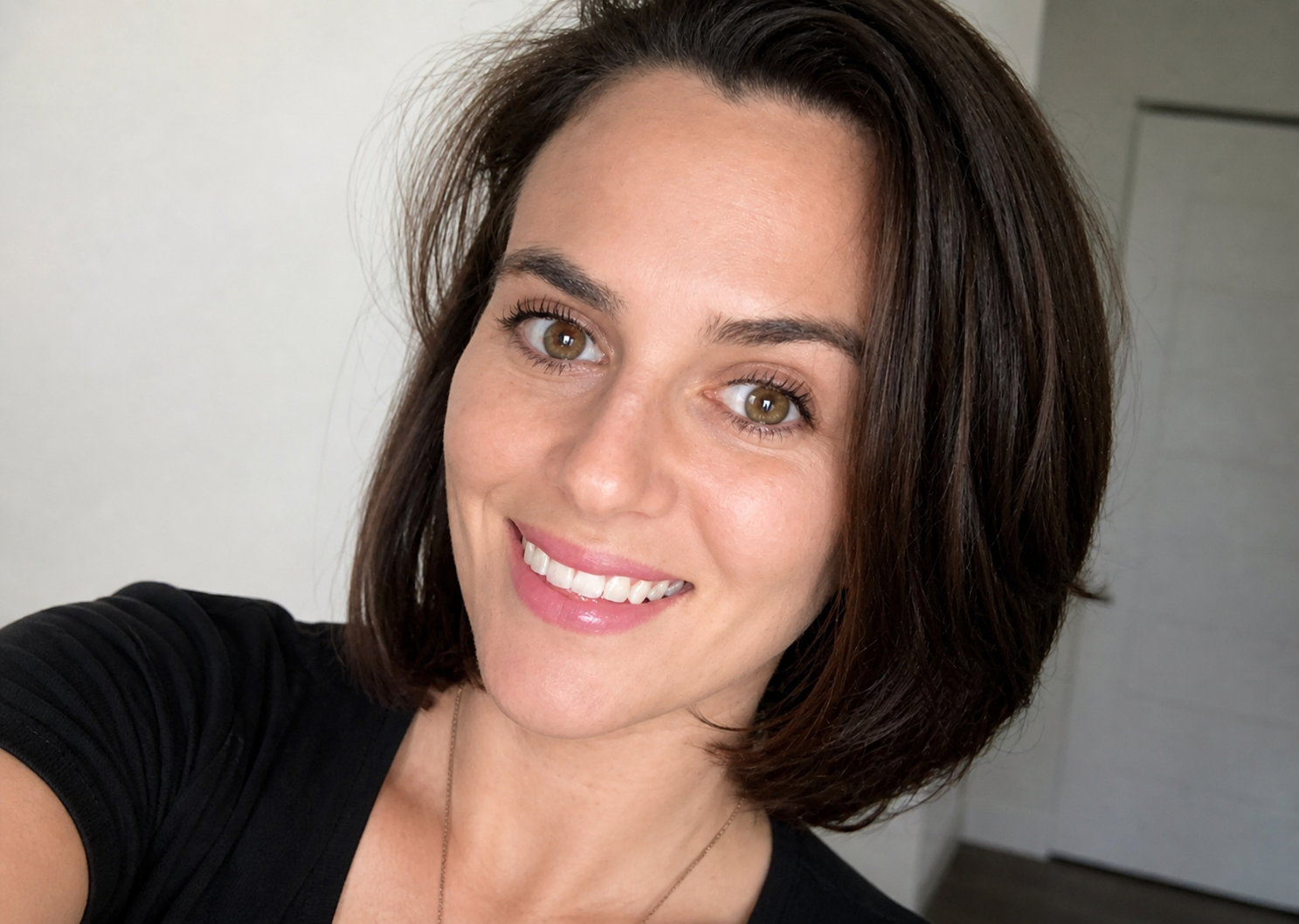
Generative AI has moved fast. In just a short time, it has gone from something mostly discussed by technologists to something everyday people are starting to use for images, videos, writing, design, memes, and personal expression. The technology is powerful, but for many users, it can still feel cold, confusing, or a little too technical.
That is where the consumer side of AI becomes interesting. The next big step is not only about making better models. It is also about making generative AI feel easy enough, friendly enough, and social enough for normal people to enjoy without needing to understand the machinery behind it.
Danielle Moros is part of that shift through her work with Blank, a company building around the idea that AI creativity should feel simple, playful, and shareable. As CMO at Blank, Danielle helps shape the brand, creative direction, and go-to-market story behind a platform that wants to make generative AI feel less like a tool hidden behind a technical interface and more like a natural space for expression.
Her role matters because consumer AI is not only a product challenge. It is also a storytelling challenge. People need to understand what a product is, why it fits into their lives, and why it feels worth coming back to. With Blank, Danielle Moros is helping turn a complex technology category into something more human, more social, and easier to understand.
Who is Danielle Moros
Danielle Moros is connected to Blank as a marketing and creative leader, with her work centered on brand, storytelling, creative strategy, and go-to-market direction. In a space where many companies lead with technical features, Danielle’s value comes from helping shape how people actually feel when they encounter the product.
That difference is important. Generative AI can easily sound intimidating. Words like models, prompts, workflows, outputs, and automation may be normal in tech circles, but they do not always invite regular users in. A strong consumer brand has to translate all of that into something people can understand quickly.
Danielle’s background gives her a useful angle on this. Her experience across creative writing, education, branding, and communication helps her look at AI not only as a piece of software, but as an experience that people need to learn, trust, and enjoy. That is especially useful for a company like Blank, where the goal is not simply to offer another AI tool, but to create a social creative environment around generative AI.
Her work sits at the intersection of creativity and clarity. She helps make the product’s message feel less technical and more inviting, which can be a real advantage in a market where many users are curious about AI but still unsure where to begin.
What Blank is building in the generative AI space
Blank is building in the world of generative AI creativity and AI-powered social networking. The broader idea is simple: people should be able to create with AI, explore what others are making, and share their own work in a way that feels natural.
Instead of treating AI as a private tool that sits in the background, Blank is working toward a more social experience. That matters because creativity has always been shaped by community. People get ideas from what others make. They remix trends. They respond to styles. They share what feels funny, beautiful, strange, or personal.
Generative AI fits naturally into that behavior, but many current AI tools still feel isolated. A user enters a prompt, waits for a result, downloads it, and then moves somewhere else to share it. Blank is trying to make that flow feel more connected by bringing creation and social discovery closer together.
This is where the platform’s identity becomes important. Blank is not just competing with AI tools. It is also trying to fit into the habits people already have around social media, creativity, and digital expression. That requires a product that feels simple, but it also requires a brand that feels alive.
The problem Blank is trying to solve
The biggest issue with many AI products is not always the technology itself. Often, the problem is the experience around the technology.
A user may hear about generative AI and want to try it, but the first step can feel unclear. Which tool should they use? What should they type? What makes a good prompt? How do they improve the result? Where do they share it? Why does one tool feel made for professionals while another feels like a toy?
For everyday users, this friction can be enough to stop the habit from forming. People may try an AI tool once, enjoy the result, and then forget about it because the product does not fit naturally into their daily creative life.
Blank is trying to solve that gap. The company’s direction is based on the belief that generative AI should not feel like a complicated software task. It should feel more like play, discovery, and expression.
This is a meaningful challenge because consumer AI needs more than impressive outputs. It needs emotional ease. It needs a clear reason for people to return. It needs the kind of product language that makes users feel, “I can do this,” instead of “I need to learn this first.”
That is where Danielle Moros’s work becomes valuable. A company can have strong technology, but if the message feels too technical or too abstract, the product may struggle to connect with the audience it wants to reach. Danielle helps shape the bridge between what Blank can do and why people should care.
How Danielle Moros brings creative leadership to Blank
Danielle Moros brings a creative leadership style that fits the needs of a consumer AI company. Her work is not only about making the brand look polished. It is about making the idea behind Blank feel clear, relatable, and easy to enter.
In a young market like generative AI, positioning matters. Users are still learning what these products are for. Some see AI as a productivity shortcut. Some see it as a creative partner. Some see it as entertainment. Some are interested but cautious.
A brand like Blank has to speak to people who may not describe themselves as AI users at all. They may simply be people who enjoy making things, sharing things, and exploring new forms of digital creativity.
Danielle’s role helps turn Blank’s product vision into a story that can reach those people. Instead of making generative AI sound like a technical breakthrough only for early adopters, she helps frame it as a creative space where anyone can participate.
This is a subtle but powerful difference. The strongest consumer technology companies often succeed because they make new behavior feel normal. Danielle’s contribution to Blank sits in that same area: helping a new kind of AI-driven creative behavior feel familiar, social, and fun.
Making generative AI feel simple instead of intimidating
Simplicity is one of the most important parts of consumer AI adoption. The average person does not want to think about model selection, prompt engineering, or technical setup every time they want to create something. They want to open a product, get inspired, make something, and share it.
That does not mean the technology has to be basic. It means the experience needs to hide unnecessary complexity. The more advanced the technology becomes, the more important the user experience becomes.
Blank is built around this kind of simplicity. Its larger promise is not just that users can create with AI, but that the act of creating can feel light and approachable. That is a very different message from many AI tools that focus heavily on power, speed, or automation.
Danielle Moros helps support this by shaping language and brand choices that lower the emotional barrier. In other words, she helps make the product feel less like a system users have to master and more like a space they can explore.
This is especially important for people who may be curious about AI but hesitant to try it. A friendly brand can reduce that hesitation. Clear messaging can make the first step easier. A playful identity can make experimentation feel safe instead of serious.
For Blank, simplicity is not just a design choice. It is part of the company’s growth strategy.
Making AI creativity social instead of isolated
A lot of AI creation still happens alone. Someone opens a tool, types a prompt, generates something, and keeps it in a folder or posts it somewhere else. That process works, but it does not always create a lasting habit.
Social platforms work differently. They give people a reason to return because there is always something to see, react to, copy, remix, or respond to. The community becomes part of the product.
That is one of the ideas behind Blank. By bringing a social layer to generative AI, the company is tapping into how people already behave online. Creativity becomes more exciting when users can see what others are making. It becomes more natural when sharing is part of the same environment. It becomes more addictive when inspiration is always nearby.
Danielle Moros’s role in this story is tied to how Blank communicates that feeling. The brand cannot feel like a dry AI utility if the product is trying to become a creative social space. It has to feel lively, accessible, and culturally aware.
This kind of positioning helps Blank move beyond the idea of AI as a one-time novelty. Instead, it suggests a future where generative AI becomes part of everyday social expression.
Building a playful brand in a serious AI market
The AI market is full of companies that sound serious. Many focus on productivity, automation, enterprise workflows, coding, analytics, or business efficiency. Those areas are important, but they are not the only future for AI.
There is also a more playful side of generative AI. People use it to imagine characters, create visual ideas, make jokes, design fantasy scenes, build alternate versions of themselves, and experiment with styles they could not easily create before.
Blank leans into that playful side. That gives the company a different kind of identity in a crowded space.
Danielle Moros helps shape that identity through branding and creative direction. Her work supports the idea that AI does not always have to feel serious or productivity-focused. It can also feel expressive, casual, and social.
That matters because the next wave of AI users may not come from developer communities or professional creative teams. They may come from people who simply want to make something cool and share it with friends.
A playful brand can reach those users faster than a technical pitch. It can make the product feel less like software and more like a creative habit.
Why Danielle Moros’s background matters for Blank’s growth
Danielle Moros’s background matters because Blank needs more than technical explanation. It needs emotional translation.
Creative writing helps with story. It allows a brand to have a voice instead of just a feature list. Education helps with accessibility. It teaches the importance of meeting people where they are, especially when they are learning something new. Marketing helps turn a product vision into a message that can travel.
Together, those skills are useful for a company trying to make generative AI feel mainstream.
When users discover a new AI product, they are not only asking what it does. They are also asking whether it feels made for them. Can they understand it quickly? Does it match the way they already create and share? Does it feel fun enough to try again?
Danielle’s work helps Blank answer those questions through brand strategy, creative positioning, and go-to-market thinking. Her role helps the company speak to users who may not care about the technical details but do care about the creative experience.
That is one reason her contribution is important. In consumer AI, the winners will not only be the companies with strong technology. They will be the companies that make the technology feel natural in daily life.
How Blank fits into the future of AI-powered social platforms
Social media has always changed with creative tools. Camera phones helped build photo-sharing platforms. Short-form video tools changed how people create and consume entertainment. Filters, templates, and editing apps made digital creativity easier for millions of users.
Generative AI may be the next major shift in that pattern.
Instead of simply posting what already exists, people can now generate new images, scenes, styles, and ideas from imagination. That changes the meaning of online creativity. It also creates room for new platforms built around AI-native behavior.
Blank fits into this future by focusing on the intersection of generative AI and social discovery. The product idea reflects a larger movement toward platforms where creation is not separate from sharing. The AI tool and the social feed become part of the same experience.
For Danielle Moros, this creates a branding challenge with real importance. Blank has to explain a new kind of behavior before it becomes obvious to everyone. It has to make AI creation feel familiar enough for users to try, but fresh enough to feel exciting.
That balance is hard. It requires a brand that can be simple without feeling shallow, playful without feeling unserious, and creative without becoming confusing.
The success story behind Danielle Moros and Blank
The success story around Danielle Moros and Blank is not about overnight fame or loud claims. It is about the role creative leadership can play in shaping a young AI company’s identity.
Blank is working in one of the most active areas of consumer technology. Generative AI is changing quickly, and many companies are trying to define what the next generation of creative platforms will look like. In that kind of market, a clear brand can become a major advantage.
Danielle’s work helps Blank stand out by making the company’s mission easier to understand. She helps bring warmth, clarity, and personality to a space that can often feel crowded with technical language.
That achievement is worth paying attention to. Many people talk about AI as a technology race, but consumer adoption is also a trust race, a design race, and a storytelling race. People return to products that feel useful, enjoyable, and easy to understand.
By helping Blank present generative AI as something simple and social, Danielle Moros is contributing to a broader shift in how people may create online. Her work shows that marketing in AI is not just about promotion. It is about helping people see where a new technology fits into their everyday lives.
How Danielle Moros is helping Blank connect with everyday creators
Everyday creators are different from professional designers, engineers, or AI specialists. They may not be looking for the most advanced settings. They may not want a long tutorial. They may not even think of themselves as creators at first.
They want a spark. They want a quick way to make something interesting. They want a space where the process feels fun rather than demanding.
Blank’s direction speaks to that audience, and Danielle Moros helps shape the message around it. Her brand work can make the platform feel open to people who might otherwise assume generative AI is too complicated or not meant for them.
This is important because the future of AI creativity will not only be shaped by experts. It will also be shaped by casual users who experiment, share, react, and build small creative habits over time.
If Blank can make those users feel comfortable, it has a chance to become part of a much larger movement in consumer AI.
Why brand storytelling matters in generative AI
Brand storytelling is often underestimated in technical markets. When a product category is new, people need more than features. They need meaning.
Generative AI can be described in many ways. It can be called a tool, a creative assistant, a content engine, a social layer, or a new form of digital expression. The words a company chooses shape how people understand the product.
That is why Danielle Moros’s role at Blank matters. She is helping guide how the company talks about itself and how users might talk about it too.
Good storytelling can make a product easier to remember. It can help users explain it to friends. It can make the first experience feel less intimidating. It can also give the company a stronger identity in a market where many products may seem similar at first glance.
For Blank, the story is not just “use AI to make things.” The stronger story is about making generative AI feel social, simple, and part of everyday creativity.
Blank and the rise of AI-native creativity
AI-native creativity means building experiences around what AI makes possible from the start. It is different from adding AI as a small feature inside an older product. An AI-native platform is shaped around creation, variation, imagination, and speed.
Blank is part of this newer category. The company is not simply trying to make existing social media slightly smarter. It is working with the idea that generative AI can become the center of a new creative experience.
That opens up interesting possibilities. Users could discover creative prompts from others. They could build on visual trends. They could turn imagination into shareable content faster than before. They could treat AI generation as a form of social play.
Danielle Moros helps give that idea a clearer public identity. Her work supports the human side of AI-native creativity by focusing on the message, the feeling, and the audience behind the product.
In a fast-moving field, that kind of clarity can make a real difference.


