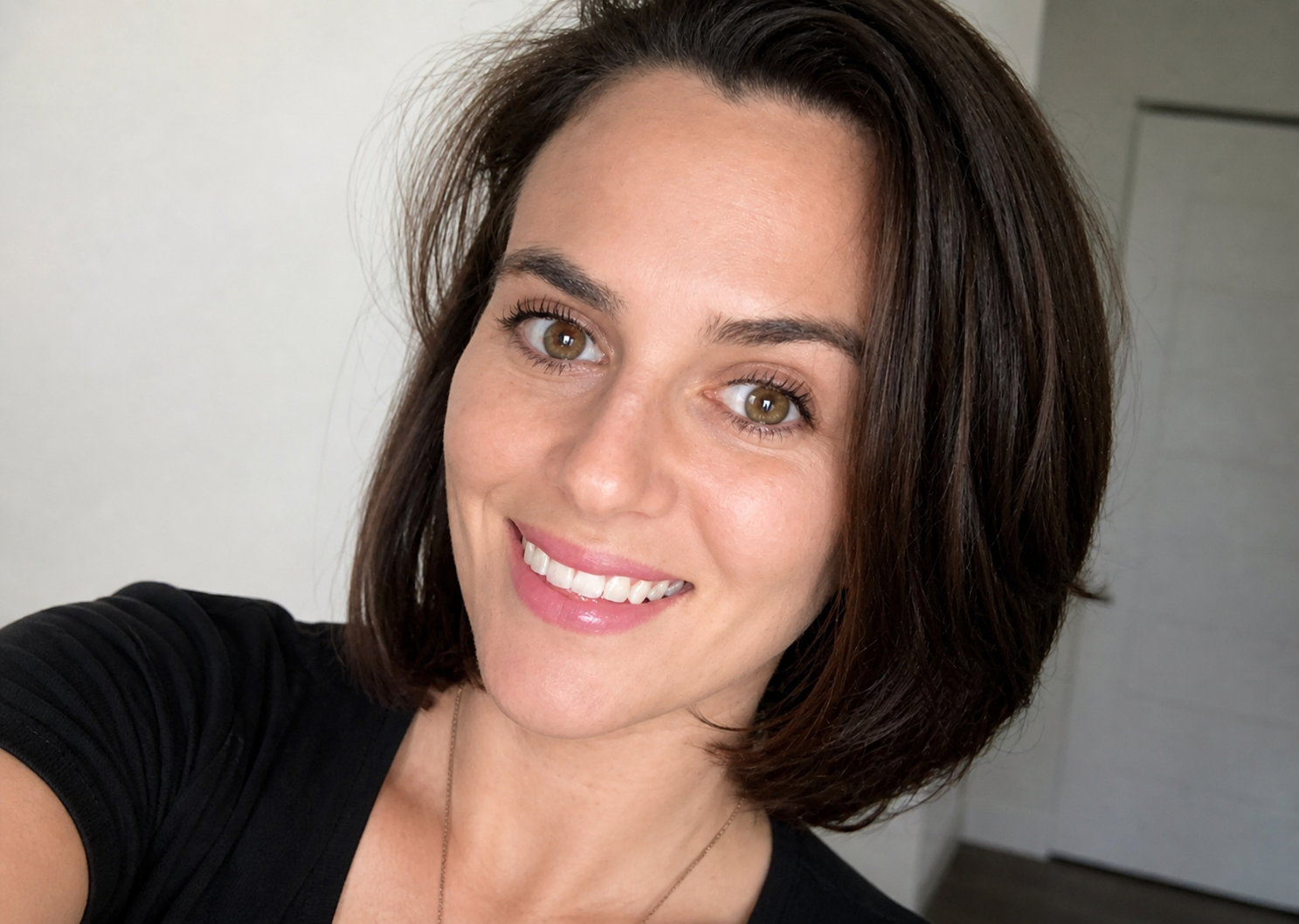
Elizabeth Nammour did not build Teleskope around a vague cybersecurity trend. She built it around a problem she had already faced inside one of the world’s most data-heavy technology companies. During her time as a security engineer at Airbnb, she saw how difficult it could be to understand where sensitive data lived, how it moved, who could access it, and whether it was actually protected.
That kind of problem is easy to describe but hard to solve. Modern companies collect data through apps, websites, cloud tools, customer platforms, internal systems, analytics products, and third-party vendors. Over time, that data spreads everywhere. Some of it is useful. Some of it is outdated. Some of it contains names, addresses, payment details, personal identifiers, confidential business records, or other sensitive information that can create serious risk if it is exposed.
For Elizabeth Nammour, this was not just a technical challenge. It was a business problem, a privacy problem, and a trust problem. The lessons she learned at Airbnb became the foundation for Teleskope, a fast growing data security startup built to help companies discover, classify, and protect sensitive data at scale.
Who is Elizabeth Nammour
Elizabeth Nammour, also known as Lizzy Nammour, is the Founder and CEO of Teleskope, a modern data security company focused on helping organizations manage sensitive data in cloud, SaaS, and hybrid environments. Her background is deeply technical, but her founder story is also shaped by a very practical understanding of how security teams work under pressure.
She studied Computer Science with a minor in Engineering Entrepreneurship at the University of Pennsylvania. Before starting Teleskope, she worked in software engineering and security roles at companies including Amazon, Booz Allen, and Airbnb. Those roles gave her exposure to large systems, complex data environments, and the growing pressure companies face as privacy and security expectations rise.
Her time at Airbnb stands out because it gave her a firsthand look at the scale of the data security problem. Airbnb handled massive volumes of user and business data across many platforms. Protecting that data required more than simple scanning tools or manual spreadsheets. It required deep visibility, accurate classification, and security workflows that could keep up with constant growth.
That experience later became the seed for Teleskope.
How Airbnb shaped Elizabeth Nammour’s view of data security
At Airbnb, Elizabeth Nammour worked on data security problems that most companies only begin to understand once their systems become large and messy. The company had huge amounts of customer data spread across many internal and external platforms. Security teams needed to know what data existed, where it was stored, who had access to it, and whether it was being handled safely.
This is where many companies struggle. Sensitive data rarely stays in one neat location. It can appear in databases, logs, cloud storage, data warehouses, code files, documents, SaaS tools, support tickets, analytics exports, and vendor systems. A single piece of personal information can be copied, moved, transformed, or stored in ways that are hard to track.
For security teams, the challenge is not just finding the data. They also need to understand its context. A file containing sensitive customer information may be normal in one system but risky in another. A dataset may be safe when only a small team can access it, but dangerous when permissions are too broad. A data field may look harmless until it is combined with other information.
At Airbnb, Nammour saw how much work it took to build internal tools that could handle this level of complexity. That kind of investment is possible for a large technology company with strong engineering resources, but most businesses do not have the time, budget, or team size to build a full data security platform from scratch.
That gap became one of the clearest opportunities behind Teleskope.
The data sprawl problem Elizabeth Nammour wanted to solve
Data sprawl happens when company data spreads across too many systems without enough visibility or control. It is one of the biggest reasons data security becomes difficult as businesses grow.
Companies collect more data because data helps them serve customers, improve products, personalize experiences, analyze behavior, train models, run operations, and make better decisions. But the more data they collect, the harder it becomes to manage. Old files sit in storage. Duplicate records appear in different platforms. Sensitive information gets copied into places where it does not belong. Access permissions become outdated. Teams create new workflows faster than security teams can review them.
This creates a simple but serious problem. If a company does not know where sensitive data lives, it cannot fully protect it.
Traditional data security tools often make this problem worse by producing too many alerts without enough context. A tool may flag thousands of files as risky, but that does not always tell a security team which risks matter most or what action should be taken next. Security teams are already busy. More alerts do not automatically mean better protection.
Elizabeth Nammour saw that companies needed more than visibility. They needed a way to connect discovery with action. That idea is central to Teleskope.
Why Elizabeth Nammour built Teleskope
Teleskope grew from a clear founder insight. Many companies were facing the same kind of data security challenges that Elizabeth Nammour had seen at Airbnb, but they did not have Airbnb’s internal engineering resources.
The market had tools for data loss prevention, governance, classification, and security posture management. But many of these products struggled when applied to real production environments. Some were too noisy. Some lacked context. Some could identify possible risk but left the hard work of fixing it to already stretched security and engineering teams.
Nammour saw an opportunity to build a platform that did not stop at pointing out problems. Teleskope was designed to help companies discover sensitive data, understand the real risk, and take action through automated remediation.
That shift matters. In cybersecurity, detection is important, but detection alone does not solve the problem. A company still has to remove unnecessary access, redact exposed content, enforce the right policies, fix misconfigurations, and prevent the same issues from coming back.
By building Teleskope around remediation, Nammour focused on one of the most painful parts of data security: turning knowledge into action.
What Teleskope does for modern companies
Teleskope helps organizations manage sensitive data across cloud, SaaS, and hybrid environments. Its platform is built around data discovery, classification, contextual risk analysis, and automated remediation.
In simple terms, Teleskope helps companies answer questions like these:
Which systems contain sensitive data?
What kind of sensitive data is inside those systems?
Who can access it?
Is it stored in the right place?
Does it violate company policy or privacy rules?
What should be fixed first?
Can the issue be remediated automatically?
The platform can scan, catalog, and classify data in motion and at rest. It looks for sensitive information, adds context around risk, and helps teams take action. That action may include revoking access, redacting content, enforcing policies, or fixing misconfigurations.
This is especially useful for companies that have outgrown manual approaches. Manual tracking may work when a business is small, but it breaks down as teams, tools, customers, and data volumes grow. A growing company needs data security that can scale with the business rather than slow it down.
How Teleskope is different from older data security tools
A major part of Teleskope’s story is its move away from the old alert-heavy model. Many security tools are built to detect and report. That can be helpful, but it also creates a new burden. If a tool gives a team thousands of alerts with limited context, the team still has to decide which alerts matter, investigate them, and fix them.
Teleskope takes a more practical approach. It focuses on precise visibility, business context, and remediation. The platform is designed to understand the company’s policies and risk profile so it can help prioritize issues that actually matter.
This makes the product more useful for teams that do not want another dashboard full of warnings. They want help reducing risk.
The company also leans into specialized AI models, machine learning routing, deterministic logic, and contextual reasoning. Instead of treating all data types the same way, it recognizes that different data sources need different classification methods. A code file, a legal document, a table in a data warehouse, a log file, and a customer support message do not behave the same way. A strong classification system needs to understand those differences.
That focus on accuracy is important because poor classification can create bad decisions. False positives waste time. False negatives create risk. For a data security platform to be useful, it must be accurate enough for teams to trust it.
How Elizabeth Nammour is positioning Teleskope for the AI era
The rise of AI has made data security even more urgent. Companies want to use AI to improve support, engineering, operations, analytics, sales, compliance, and internal productivity. But AI systems often need access to company data to be useful. That creates a new question for security leaders: which data is safe to use, and which data needs tighter controls?
This is where Teleskope fits into a larger market shift. AI can make it easier for teams to search, summarize, and act on company data. But it can also make sensitive information easier to surface if controls are weak. Data that was once buried deep inside a system may become easier to find through prompts, automation, agents, or integrations.
For companies adopting AI, visibility becomes the starting point. They need to understand what sensitive data they have before they can decide how it should be governed. They need policies that match real business risk. They need automated controls that can keep up with fast-moving teams.
Elizabeth Nammour is positioning Teleskope around this exact need. The company’s platform helps organizations protect sensitive data while still moving forward with AI adoption. That balance is important because companies do not want to choose between innovation and security. They need both.
Teleskope’s funding and growth story
Teleskope’s growth shows how serious the market has become about data security in the AI era. The company raised $25 million in Series A funding, led by M13, with continued participation from Primary Venture Partners and Lerer Hippeau. The round brought the company’s total funding to $32.2 million.
Funding alone does not make a company successful, but it does show investor confidence in the problem, the team, and the market opportunity. For Teleskope, the funding reflects growing demand for tools that help businesses manage sensitive data more intelligently.
The company has also been associated with customers and organizations such as Ramp, LegalZoom, Alloy, GoFundMe, and The Atlantic. That kind of customer base points to a broad use case. Data security is not only a concern for one type of business. It matters to fintech companies, legal platforms, media organizations, consumer brands, enterprise teams, and any company handling sensitive information.
For Elizabeth Nammour, this growth represents the next stage of a founder journey that started with a technical problem inside Airbnb and developed into a company serving a wider market.
What Elizabeth Nammour’s founder journey says about modern cybersecurity
One reason Elizabeth Nammour’s story stands out is that it reflects strong founder market fit. She did not enter data security from the outside. She lived the problem, helped build internal solutions, saw where the existing market fell short, and then built a company around that insight.
In cybersecurity, that kind of practical experience matters. Security teams are often skeptical of tools that sound impressive in demos but become difficult to use in real environments. They need products that work with messy data, complex permissions, old systems, fast-moving teams, and strict compliance expectations.
Teleskope is built around that reality. Its focus on automated remediation speaks directly to the daily frustration of security teams that are tired of chasing alerts. Its emphasis on context recognizes that not every risk is equal. Its AI-era positioning shows that data protection is no longer just about preventing leaks. It is also about helping companies use data safely as technology changes.
Nammour’s journey also shows how modern cybersecurity founders are thinking beyond fear-based messaging. The goal is not only to scare companies about breaches or compliance failures. The goal is to help them operate with more confidence. Better data security can reduce risk, support compliance, lower unnecessary storage, improve governance, and make AI adoption safer.
Why Elizabeth Nammour’s work matters for businesses today
The work Elizabeth Nammour is doing with Teleskope matters because data has become one of the most valuable and most difficult assets inside a company. Businesses depend on data to grow, but that same data can become a liability when it is poorly managed.
Security leaders need to know where sensitive data is stored. Privacy teams need to meet regulatory expectations. Engineering teams need tools that fit into real workflows. Executives need confidence that AI adoption will not create hidden exposure. Customers need to trust that their information is being handled responsibly.
This is why data security is becoming a board-level issue rather than a back-office concern. Companies cannot afford to treat sensitive data as something they will clean up later. The more systems they use, the more urgent the problem becomes.
Teleskope is trying to make that work more manageable. By combining discovery, classification, context, and remediation, it gives teams a clearer way to reduce risk without relying only on manual review. That is the practical lesson at the center of Nammour’s story: strong data security should not just tell teams what is wrong. It should help them fix it.