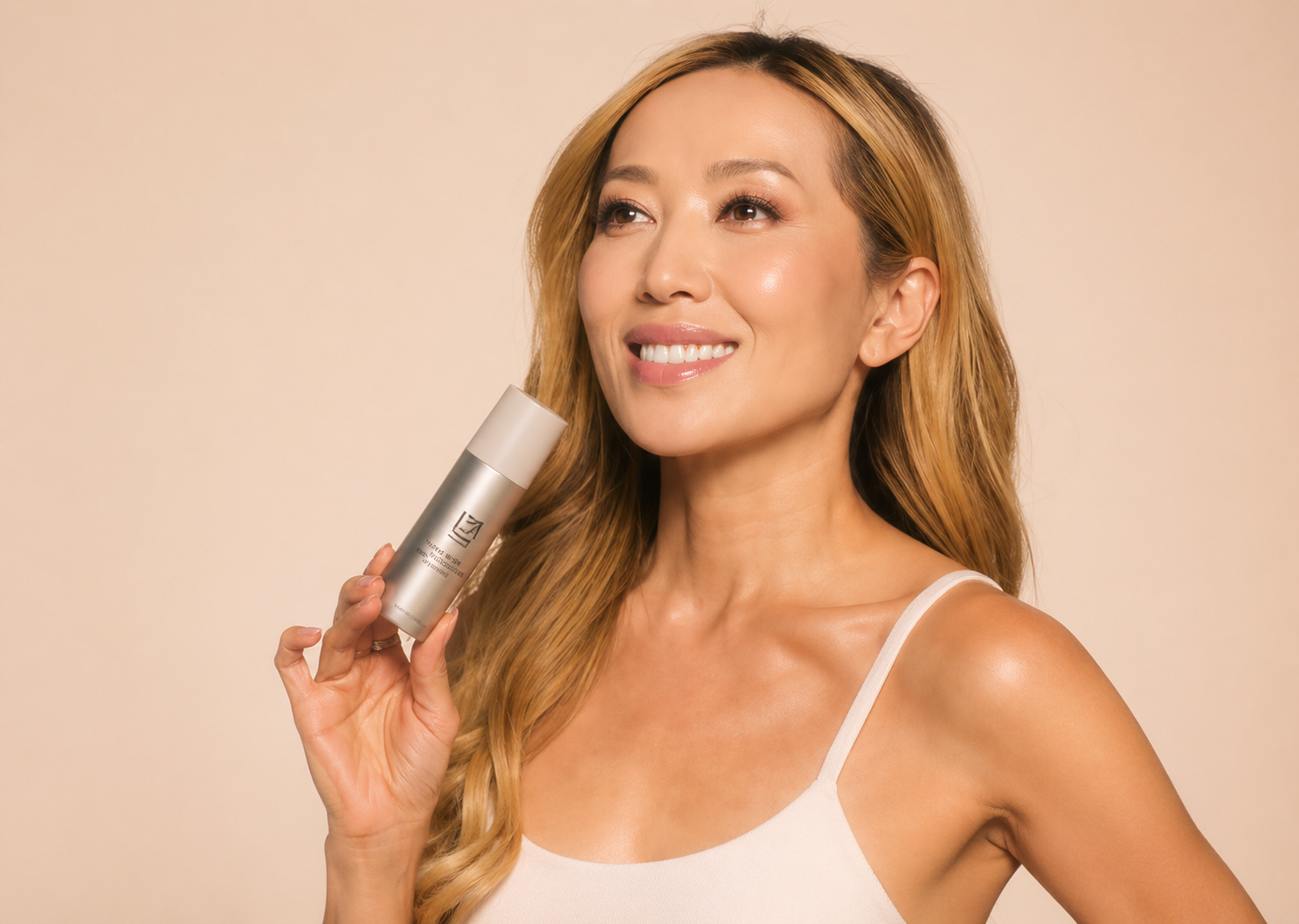
Tina Craig did not walk into beauty as a random internet personality trying to cash in on a trend. By the time U Beauty arrived, she had already spent years building trust online, shaping taste, and learning what modern consumers actually respond to. Long before beauty founders were everywhere, Craig had already built a reputation as someone people listened to.
That background gave her something many new brands spend years trying to earn: credibility. People already knew her name, understood her point of view, and trusted her eye. But that only explains why people were willing to pay attention. It does not explain why U Beauty lasted, grew, and carved out a real place in premium skincare.
What Tina Craig did well was turn familiarity into belief and belief into a brand with a clear identity. U Beauty was not built to be another influencer label with a recognizable founder and forgettable products. It was built around a sharper idea. The pitch was simple from the start. Skincare did not need to be bloated, confusing, or packed with products that overlapped. It could be edited, effective, and still feel luxurious.
That combination of personal authority, product discipline, and smart positioning is what made Tina Craig’s move into beauty work.
Tina Craig Built Trust Long Before U Beauty
Before U Beauty, Tina Craig was already known in digital fashion and lifestyle circles through Bag Snob, one of the early blogs that helped shape online taste culture. She built a following during a very different era of the internet, when influence was not driven by short video trends or endless product drops. It came from consistency, a recognizable voice, and the ability to build genuine audience loyalty over time.
That matters when looking at her success with U Beauty. Craig was not starting from zero, and she was not borrowing attention from someone else’s platform. She had spent years developing a point of view that people trusted. Her audience saw her as someone with experience, access, and strong opinions about quality. In beauty, that kind of trust can carry more weight than a flashy launch campaign.
She also had something more valuable than visibility alone. She had context. Years of working closely with brands, products, and the luxury consumer space gave her a close view of how people shop, what they aspire to, and what often disappoints them. That made her more than a public face. It made her someone who understood how brand perception is built.
Why Beauty Was a Natural Step
For Tina Craig, beauty was not a sudden pivot. It was already part of the world she had been moving in for years. Her platform, her audience, and her career all overlapped with fashion, lifestyle, skincare, and luxury product culture. She had seen the beauty industry from the inside, not just as a customer but as someone constantly exposed to the best products, the strongest marketing, and the changing expectations of consumers.
That gave her an advantage when she moved into skincare. She understood both aspiration and fatigue. She knew people wanted results, but she also knew they were exhausted by routines that kept getting longer, more expensive, and more complicated. The modern beauty customer had more access than ever, but not always more clarity.
That tension created the opening for U Beauty. Craig was not trying to enter the market by copying what already existed. She was stepping into it with a clearer point of view about what was missing.
The Problem Tina Craig Wanted to Solve
One of the smartest things about U Beauty is that it was built around a real consumer frustration. For years, skincare had trained people to believe that better skin required more steps, more layering, and more products. The routine itself became part of the identity. But for many people, that approach created confusion as much as confidence.
Tina Craig saw an opportunity in simplifying that experience. Instead of selling excess, U Beauty leaned into the idea that fewer products could do more. That was not just a marketing line. It became the backbone of the brand.
This is where Craig’s credibility helped. When a founder talks about simplifying beauty, people want to know whether that person actually understands the category well enough to strip it down without making it feel basic. Craig’s history gave that message weight. She was not rejecting beauty culture from the outside. She was editing it from within.
That distinction helped U Beauty stand out. It felt like a response to skincare overload rather than just another addition to it.
How U Beauty Was Built Around a Clear Promise
U Beauty, co-founded by Tina Chen Craig and Katie Borghese, entered the market with a clear identity instead of a vague founder story. The brand was not asking people to buy into a personality alone. It was asking them to buy into a philosophy.
That philosophy was straightforward. Deliver visible results with a more streamlined routine. In a category crowded with long ingredient lists, endless launches, and too many product claims, that kind of clarity was powerful.
The brand’s premium positioning also helped. U Beauty did not try to feel mass, trendy, or disposable. It presented itself as modern luxury with a focused assortment and a sense of restraint. That restraint actually became part of the appeal. Rather than flooding the market with dozens of products, the brand built interest through select releases and a more controlled brand image.
This approach gave U Beauty a stronger identity than many founder-led beauty brands. It felt deliberate. And in beauty, deliberate brands usually earn more respect than brands that seem rushed.
How Early Influence Helped U Beauty Break Through
Credibility does not guarantee sales, but it can absolutely lower the barrier to trial. That is one of the clearest ways Tina Craig’s early influence helped U Beauty.
Consumers were more likely to trust the brand because Craig already had a long-standing relationship with an audience that associated her with taste, curation, and product discernment. When she introduced U Beauty, people were not just looking at a new skincare label. They were looking at something shaped by someone whose standards they already recognized.
That mattered even more because U Beauty launched with a focused product story rather than a giant assortment. The Resurfacing Compound became the hero product and gave the brand a clear center of gravity. Instead of asking consumers to understand a complicated range, U Beauty gave them one strong starting point.
That is often how strong beauty brands begin. They do not try to say everything at once. They get one thing right, make it memorable, and build from there.
Why U Beauty Felt Bigger Than an Influencer Brand
A lot of influencer-led brands get attention quickly and lose relevance just as fast. They often feel too dependent on the founder’s image, too reactive to trends, or too thin in product substance. U Beauty managed to avoid that trap.
Part of the reason is that Tina Craig did not present the brand as a vanity extension of her online identity. U Beauty had its own world, its own visual language, and its own product philosophy. Craig’s presence helped open the door, but the brand still needed to stand on its own.
The company also leaned into science-backed language, performance claims, and a more serious product story. Its technology and efficacy messaging gave the brand more depth than the average founder launch. That helped shift the conversation away from who started it and toward why the products were worth trying.
This is a big reason U Beauty has remained relevant. It was introduced through founder credibility, but it was not trapped by it.
The Launch Strategy That Turned Attention Into Momentum
Tina Craig’s credibility created interest, but the brand’s launch strategy helped turn that interest into real momentum. U Beauty did not rely on noisy traditional advertising or a flood of paid promotion. Instead, it grew through controlled exposure, selective sampling, and prestige distribution.
That strategy fit the brand. Sampling gave people a chance to experience the product instead of just hearing claims about it. That is especially important in skincare, where repeat purchase depends on belief in results. Once people felt the product worked, the brand had a much better chance of building loyalty.
Its retail positioning also signaled quality. Launching in a prestige environment helped frame U Beauty as a serious luxury skincare brand rather than a social media side project. That kind of placement matters because consumers often use retail context as a shortcut for judging trust and quality.
What made the strategy work was alignment. The founder story, the product promise, the packaging, the distribution, and the brand voice all felt like they belonged together. Nothing about the launch felt random.
How U Beauty Grew Into a Serious Beauty Business
The strongest proof of Tina Craig’s success is that U Beauty moved beyond founder buzz and became a real business with staying power. As the brand expanded, it continued to sharpen its product identity rather than dilute it. That alone is rare.
It also gained stronger market validation over time. Retail expansion, consumer loyalty, and outside investment all signaled that U Beauty had grown into more than a founder-driven launch story. The brand’s minority investment from Sandbridge Capital reinforced that idea. It suggested the company had developed enough traction, clarity, and long-term potential to attract serious strategic backing.
This phase of the story matters because it changes how Tina Craig should be viewed. She is not just someone who built attention. She is someone who helped turn cultural credibility into a business with structure, growth potential, and a distinct point of view in a crowded industry.
What Tina Craig’s U Beauty Story Says About Modern Brand Building
Tina Craig’s success with U Beauty says something important about how modern brands actually grow. Influence alone is rarely enough. Visibility can get people to look, but it does not make them stay. What builds staying power is a combination of trust, clarity, and product conviction.
Craig had the trust piece long before U Beauty launched. But what made the business work was the way she translated that trust into a brand that solved a recognizable problem. She did not use her audience as a shortcut around brand-building. She used her credibility as an entry point, then backed it up with a focused proposition.
That is a much smarter model than the usual influencer-brand formula. Instead of launching a name-driven business with scattered products, she built U Beauty around a disciplined idea and let the brand mature at its own pace.
There is also a broader lesson here for entrepreneurs. A founder’s reputation can create early momentum, but only if it connects naturally to the product and the market. In Tina Craig’s case, the move made sense. Her history, audience, aesthetic, and category knowledge all aligned. U Beauty did not feel forced. It felt like the next logical chapter.
Lessons Entrepreneurs Can Take From Tina Craig and U Beauty
The first lesson is that trust compounds. Tina Craig did not build credibility overnight, and she did not try to use it carelessly. She spent years developing a voice people recognized before attaching that trust to a product.
The second lesson is that sharp positioning beats broad messaging. U Beauty did not try to be everything for everyone. It entered the market with a more edited promise and made that simplicity feel aspirational.
The third lesson is that founder credibility works best when the product can support it. If the product feels weak, the founder story starts to feel like a distraction. U Beauty avoided that by building around a hero product, visible results, and a consistent brand identity.
The fourth lesson is that execution matters just as much as narrative. Selective sampling, prestige placement, a controlled assortment, and careful brand-building all helped U Beauty grow in a way that felt intentional.
And finally, Tina Craig’s story shows that modern entrepreneurship is not just about being known. It is about turning recognition into relevance, and relevance into something durable.