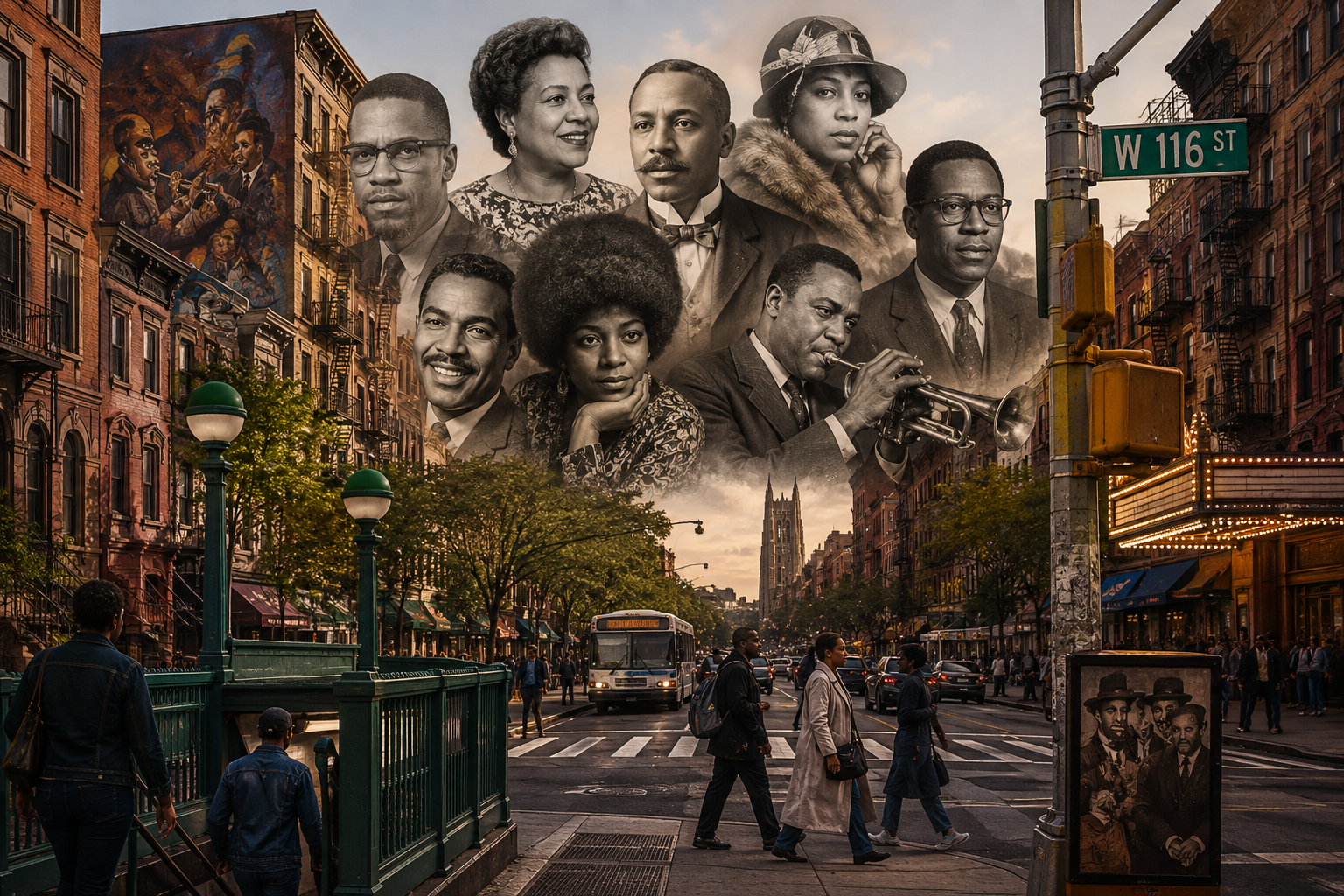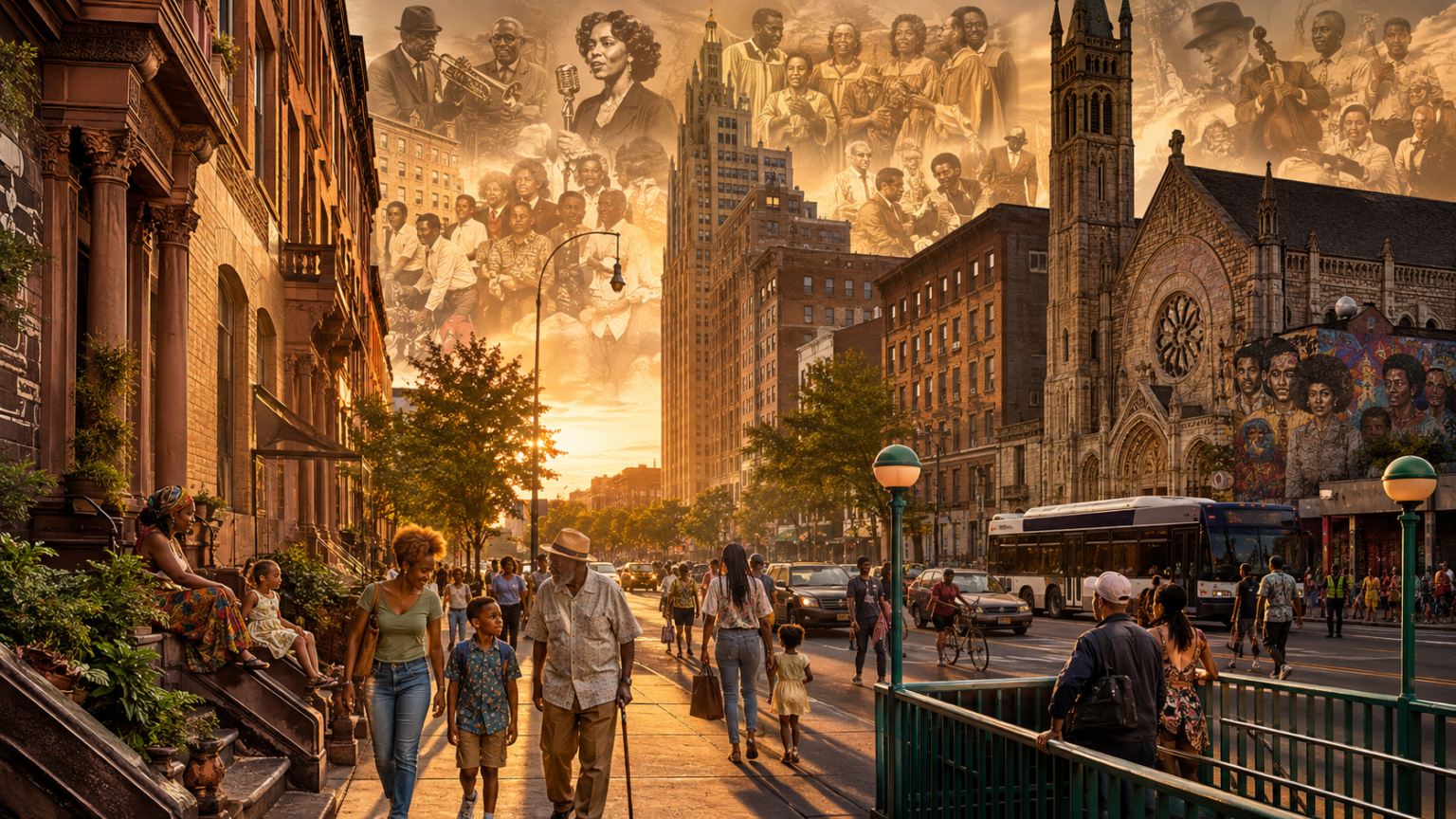
Few streets carry as much cultural weight per block as Lenox Avenue. Langston Hughes called it “Harlem’s heartbeat,” and for roughly a century it has been exactly that — the commercial and cultural spine of Harlem, running the length of Manhattan’s most storied neighborhood. This is the definitive rundown: the timeline, the landmarks, the people, and what actually remains on the avenue today.
Lenox Avenue at a Glance
Here are the fast facts most searchers are after, whether you typed lenox ave, lenox avenue manhattan, or the common misspelling lennox ave:
| Location | Harlem, Upper Manhattan, New York City |
| Also known as | Malcolm X Boulevard (co-named 1987) |
| Route | Central Park North (110th Street) north to 147th Street |
| Length | Roughly 1.9 miles |
| Named for | Philanthropist James Lenox (1887) |
| Subway | IRT Lenox Avenue Line — today’s 2 and 3 trains |
| Nickname | “Harlem’s Heartbeat” (Langston Hughes) |
One point of confusion worth settling immediately: Lenox Avenue and Malcolm X Boulevard are the same street. Both names are official, both appear on street signs, and locals use them interchangeably. If you’re navigating lenox avenue ny or lenox avenue nyc addresses, either name will get you there.
Note also that other cities have a Lenox Avenue — the one in Jacksonville, Florida, for example, is unrelated. This guide is strictly about Harlem’s Lenox Avenue in New York.
Origins and Historical Timeline
No competing page lays out the avenue’s story as a single chronology, so here it is — the milestones that turned a numbered thoroughfare into a cultural landmark.
- 1887 — The stretch previously treated as an upper extension of Sixth Avenue is formally named Lenox Avenue, honoring James Lenox, the bibliophile and philanthropist whose library collection later helped seed the New York Public Library.
- 1904–1905 — The IRT Lenox Avenue subway line opens beneath the avenue, and rapid transit accelerates Harlem’s residential build-out. Speculative development brings the rowhouses and apartment blocks that define the corridor.
- 1910s — The Great Migration reshapes Harlem as Black families move north from the South and up from lower Manhattan, and Lenox Avenue becomes a main street of Black New York.
- 1920s–1930s — The Harlem Renaissance. The Savoy Ballroom, the Cotton Club and dozens of clubs and cabarets turn the avenue into the center of American nightlife, music and literature.
- 1939 — The Lenox Lounge opens at 288 Lenox Avenue, later drawing Billie Holiday, Miles Davis and John Coltrane.
- 1960s — The civil rights and Black Power eras give the avenue new political weight as a site of organizing, protest and community institutions.
- 1987 — Lenox Avenue is co-named Malcolm X Boulevard, following advocacy associated with Malcolm X’s widow, Dr. Betty Shabazz, and Harlem community leaders.
- Today — A mix of preserved landmarks, new development, longtime institutions and the ever-present 2/3 trains beneath the pavement.
Notable People and Events
The avenue’s cultural footprint is enormous, and it shows up across music, poetry and film in ways that are usually scattered across separate pages. Pulled together, the legacy is striking.
The poets and writers
Langston Hughes gave the street its enduring nickname and wrote it into verse repeatedly — “Juke Box Love Song” and “Lenox Avenue: Midnight” among them, the latter setting “the rhythm of life” to the sound of the boulevard after dark. Writers including James Baldwin, Zora Neale Hurston and Ralph Ellison moved through the same clubs and salons that clustered along and just off the avenue.
The musicians and composers
Lenox Avenue is arguably the most-referenced street in American music. Fats Waller recorded “Lenox Avenue Blues.” Composer William Grant Still wrote an orchestral work titled “Lenox Avenue.” Decades later, saxophonist Arthur Blythe released the acclaimed album “Lenox Avenue Breakdown.” On the bandstands themselves, Duke Ellington’s orchestra defined the Cotton Club sound, while the Lenox Lounge hosted Billie Holiday, Miles Davis and John Coltrane. If you searched lenox avenue breakdown, lenox avenue blues or lenox avenue midnight, they all trace back to this one corridor.
The 1987 renaming
The Malcolm X Boulevard co-naming was a deliberate act of memory, aligning the avenue with the civil rights leader who preached and organized in Harlem. It reflects a broader pattern — several Harlem avenues carry honorary names for prominent African Americans — and it remains the single most common question visitors ask about the street.
Harlem’s cultural web extends well beyond the avenue itself. If you’re tracing this history, our profiles of Billy Dee Williams and his Harlem roots, actress Helen Martin, and the Audubon Ballroom — where Malcolm X was assassinated — fill in the surrounding story.
Role in Harlem History
During the Renaissance, Lenox Avenue functioned as Harlem’s main stage. Three venues carried outsized influence:
- The Cotton Club (originally at 142nd Street and Lenox Avenue) — glamorous, nationally broadcast, and notoriously segregated for much of its run: Black performers, largely white audiences. Its legacy is genuinely complicated, celebrated for the talent it launched and criticized for the exclusion it enforced.
- The Savoy Ballroom (596 Lenox Avenue, between 140th and 141st) — billed as “the World’s Finest Ballroom” and, crucially, integrated on the dance floor. The Savoy was the birthplace of the Lindy Hop and the site of legendary battle-of-the-bands nights.
- The Lenox Lounge (288 Lenox Avenue) — a smaller, intimate jazz room whose Art Deco Zebra Room became a symbol of the avenue’s mid-century cool.
The avenue also served as a meeting ground for African American, Caribbean and, over time, Latino communities — a convergence that shaped Harlem’s food, music and politics. It sits within walking distance of other landmarks worth knowing: Strivers’ Row (the elegant 138th and 139th Street townhouses), Astor Row on 130th Street, and Harlem Hospital. For the broader neighborhood picture, see our history of New York’s 116th Street and the Ephesus SDA church and its Harlem legacy.
What Remains Today
Walk lenox avenue harlem now and you’ll find a layered street — some of the legend gone, some of it preserved, and plenty of everyday Harlem life.
The Savoy Ballroom is gone; it was demolished in the 1950s and a commemorative plaque marks the site. The Cotton Club’s original Lenox location no longer stands, though the name has been revived elsewhere. The Lenox Lounge, sadly, closed in 2012 and its famous facade and interior were later stripped — a loss that galvanized local preservationists and remains a cautionary tale about how quickly cultural landmarks can vanish without formal protection.
What you will see today is a working avenue: brownstones and prewar apartment houses, longtime churches, restaurants and cafés, newer retail and residential development, and the community institutions that have anchored the corridor for generations. The 2 and 3 trains — the modern face of the old IRT Lenox Avenue Line — still run beneath it, with stations threading the avenue from roughly 110th to 148th Streets and making it easy to build the street into a self-guided Harlem history walking tour.
For visitors, the honest advice is this: come for the history, but experience the present. Lenox Avenue today is a lived-in neighborhood main street, not a museum — which is precisely what makes it worth the walk. Read the plaques, note the addresses, and picture the marquees that once lit up lenox avenue new york from Central Park North to Sugar Hill.
FAQs
What is Lenox Avenue called now?
Lenox Avenue is officially co-named Malcolm X Boulevard. Both names are legally recognized and appear on street signs, and Harlem residents use them interchangeably. The avenue was never renamed — the two names simply coexist.
Why is Lenox Avenue also called Malcolm X Boulevard?
In 1987, the City of New York co-named the avenue Malcolm X Boulevard to honor the civil rights leader who preached and organized in Harlem. The change followed advocacy connected to his widow, Dr. Betty Shabazz, and Harlem community leaders.
Who was Lenox Avenue named after?
The avenue was named in 1887 for James Lenox, a wealthy New York philanthropist and book collector whose library holdings later helped form the New York Public Library. The street had previously been treated as an upper extension of Sixth Avenue.
How long is Lenox Avenue and where does it start and end?
Lenox Avenue runs about 1.9 miles through Harlem in Upper Manhattan, beginning at Central Park North (110th Street) and continuing north to about 147th Street.
What subway line runs under Lenox Avenue?
The IRT Lenox Avenue Line runs beneath the avenue — today served by the 2 and 3 trains. It opened in the mid-1900s and helped drive Harlem’s early residential development.
What famous clubs and landmarks were on Lenox Avenue?
The avenue was home to the Savoy Ballroom (596 Lenox), the original Cotton Club (142nd and Lenox) and the Lenox Lounge (288 Lenox). Nearby stand Strivers’ Row, Astor Row and Harlem Hospital, making the corridor a hub of Harlem Renaissance culture.