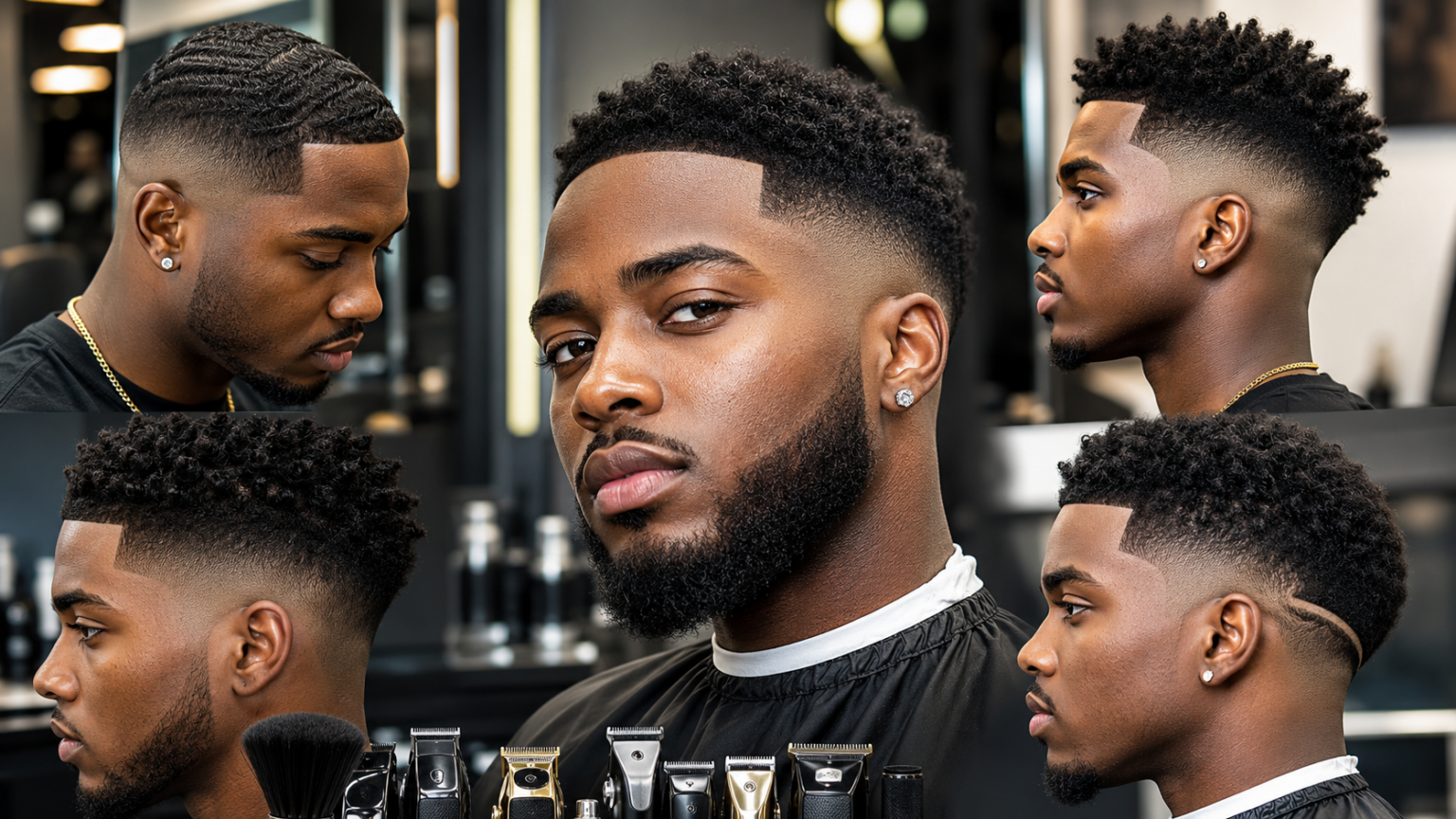
A fade is the most requested cut in Black barbershops for a reason: it works with waves, curls, coils, locs and braids, it frames the face cleanly, and it reads sharp in almost any setting. But “give me a fade” is where a lot of bad haircuts start. The word covers at least seven distinct cuts, and the right one depends on your hair type, your face, and how often you can realistically get to a chair.
This guide skips the endless photo gallery. Instead we tell you which fade fits which head, exactly how to ask for it, and how to keep it looking fresh between visits.
Quick Answer: What Is a Fade and Which One Should You Get
A fade blends your hair from longer on top down to very short — or all the way to skin — at the sides and back. The height of the fade is where that blend starts on your head, and the technique is how it’s shaped around the ear and neckline.
If you want the safest, most versatile choice, a low or mid skin fade with a clean line-up suits almost everyone and works in any professional environment. Want more contrast and a bolder look? Go high or burst. Below we break down every option, then match them to your specific hair and lifestyle.
- Jump to: the styles, how to choose and ask your barber, day-of styling, or the maintenance schedule.
Best Fade Haircut Styles for Black Men
Think of these in two groups: how high the fade climbs, and how it’s shaped.
Fades by height
- Low fade / low taper fade — the blend starts just above the ear. Subtle, professional, and forgiving. This is the go-to black men’s low fade haircut and the easiest to maintain.
- Mid fade — starts around the temple. The most balanced contrast, and it pairs beautifully with afros, twists, high tops and mohawks.
- High fade — climbs high on the sides for maximum contrast. A bold, modern look that’s popular with younger guys and anyone who wants their top length to pop.
- Skin / bald fade — fades all the way to bare skin. Cleanest possible finish, but it grows out fastest and needs the most upkeep. (Skin fade and bald fade are the same cut, different names.)
Fades by shape
- Taper fade — a gentle transition concentrated at the sideburns and neckline, leaving more length on the sides. The most classic, understated black man fade.
- Drop fade — the fade line curves down behind the ear, following the head’s shape. Flatters curly and textured hair.
- Burst fade — arcs in a semicircle around the ear, tapering into the neck. A favorite with 360 waves and mohawks.
Fades with braids, locs and waves
These deserve their own callout because most style roundups skip them:
- Braids with a fade — a mid or high skin fade on the sides keeps the length and detail up top clean and defined. Ask for the fade first, then have your braider work the top.
- Dreadlocks with a fade — a mid skin or drop fade complements loc length without competing with it. Time the fade with your retwist appointments.
- 360 waves — a low or high skin fade with a sharp line-up makes the wave pattern the centerpiece.
How to Choose the Right Fade — and Ask For It Correctly
Three factors decide the right cut: your hair, your face, and your schedule.
Match it to your hair type
- Waves: low or high skin fade with a crisp line-up.
- Curly hair: a drop fade follows the curl and keeps volume balanced.
- Afro / high-density hair: a mid fade gives contrast without shrinking the top.
- Locs or braids: mid skin or drop fade to complement the length.
Match it to your face and setting
Rounder faces gain definition from higher-contrast high fades that add vertical length. Square or angular faces are flattered by low-to-mid fades that soften the jaw. For work-forward, conservative environments, a low or taper fade is the safe call; high and burst fades suit more expressive settings.
How to talk to your barber
This is where most bad fades are avoided. Barbers work in guard numbers — the clipper attachments that set length, from #1 (about 1/8 inch) up to #8. A skin fade means going below a guard, straight to the blade or foil. Say it like a pro:
“Low skin fade, blend starting just above the ear, #2 up top, sharp line-up, and a natural neckline.”
Bring one or two reference photos — barbers read images faster than adjectives. Be explicit about three things: the height where the blend starts, whether you want skin or a taper at the bottom, and how much length to leave on top. A picture plus those three details gets you the cut in your head, not the barber’s guess.
Step-by-Step: Styling and Care After the Cut
A fade looks its best the moment you leave the chair. Here’s how to keep that up.
- Day of the cut: style the top for your texture — a wave brush and pomade for waves, a dime of curl cream worked in damp for curls, a light sponge-twist for coils.
- Lock in the line-up: a thin layer of edge control along the hairline keeps it crisp for the first few days.
- Daily moisture: textured hair and a fresh fade both dry out. Use a light oil or leave-in on the scalp and hair — the same discipline that keeps skin calm after a close shave keeps a faded hairline from looking ashy.
- Overnight: a durag for waves, or a satin bonnet for longer curls and locs, preserves the pattern and reduces frizz.
Maintenance Schedule and Common Mistakes
How often you go back depends almost entirely on the fade height. Higher and tighter fades grow out visibly faster.
| Fade type | Touch-up window |
|---|---|
| Skin / high fade | Every 1–2 weeks |
| Mid fade | Every 2–3 weeks |
| Low fade / taper | Every 3–4 weeks |
The most common mistakes we see:
- Self-edging the line-up. Cleaning up your own hairline with a trimmer is the fastest way to push your line back and shrink your forehead over months. Leave the edges to your barber; touch up only stray neck hair if you must.
- Waiting too long. A grown-out skin fade loses its whole shape. If the blend has vanished into a solid block, it’s time — don’t stretch a 1–2 week fade to a month.
- Product buildup. Heavy pomade without washing dulls waves and clogs the scalp. Wash and moisturize on a rhythm.
- Switching barbers and guard numbers. A great fade is consistent. Once you find the height and guards that work, write them down and repeat the request.
Between visits, a soft brush, a durag, and daily moisture will carry a low fade or taper comfortably to the three-week mark. If you’re in Harlem or nearby, the barbershops along Lenox Avenue and around 116th Street have long set the standard for this kind of precision work — a good reference point for what a clean blend should look like.
Get the height right for your face, ask for it in guard numbers, and match your touch-up schedule to reality. Do that and a fade is the lowest-drama, highest-payoff cut you can wear.
FAQs
What is the best fade haircut for a Black man?
For most people, a low or mid skin fade with a clean line-up is the most versatile choice — it works with waves, curls, coils, locs and braids, and it’s appropriate in professional settings. Go high or burst if you want more contrast and a bolder look, and choose the fade height that matches your face and how often you can get to the barber.
What is a good low fade haircut for Black men?
A low fade blends the hair to very short or skin starting just above the ear, so most of the head keeps length. It’s subtle, professional and the easiest fade to maintain — stretching comfortably to 3–4 weeks between visits. Pair it with waves, a short curly top, or a taper for a clean, understated black men’s low fade haircut.
How do I ask my barber for a fade?
Use guard numbers and be specific about three things: where the blend starts (low, mid or high), whether you want skin or a taper at the bottom, and the length on top. For example: ‘Low skin fade, blend just above the ear, #2 on top, sharp line-up.’ Bring one or two reference photos — barbers read images faster than descriptions.
How often should you get a fade haircut?
It depends on the height. Skin and high fades lose their shape fast and need a touch-up every 1–2 weeks. Mid fades hold for 2–3 weeks. Low fades and tapers can stretch to 3–4 weeks. The tighter and higher the fade, the more often you’ll be back in the chair.
Can you get a fade with dreadlocks or braids?
Yes, and it’s a popular look. A mid skin fade or drop fade on the sides complements the length of locs or braids without competing with them. Time the fade with your retwist or re-braid appointments so the sides and top stay in sync, and let your barber do the fade first before the top is styled.
What’s the difference between a taper and a fade?
A fade blends hair all the way down to very short or bare skin across the sides and back. A taper is gentler — it only shortens gradually around the sideburns and neckline, leaving more length on the sides. Every skin fade is dramatic; a taper fade is the subtle, classic version that suits conservative settings.